
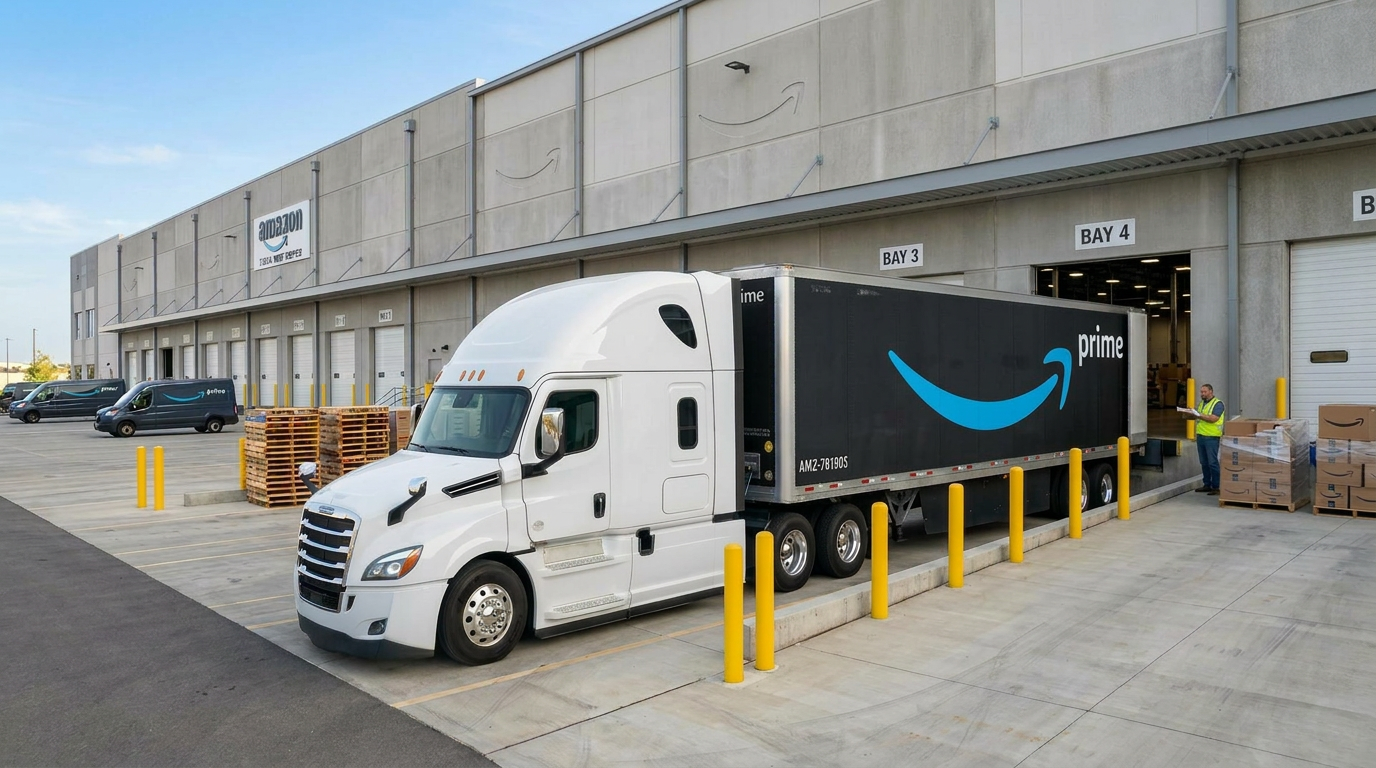
How to Get Started with Amazon Relay in 2026: A Complete Guide for Carriers
If you’re a motor carrier or owner-operator looking for consistent freight, quick pay, and a simple booking process, Amazon Relay is worth a serious look. Amazon’s freight platform connects carriers directly to Amazon loads — both live load/unload and drop-and-hook — through a dedicated load board and mobile app.
But before you can start hauling Amazon freight, you need to meet their requirements and get approved. This guide breaks down exactly how to get started with Amazon Relay, what you need to qualify, and how to avoid the mistakes that slow most carriers down.
What Is Amazon Relay?
Amazon Relay is Amazon’s own freight platform built for motor carriers and owner-operators with interstate authority. It gives approved carriers access to Amazon’s load board, where you can book loads, manage freight, and handle check-ins and document uploads through the Relay mobile app.
Amazon is relatively carrier-friendly compared to some large shippers — they work with newer and smaller operations, and they accept coverage placed through risk retention groups as long as all limits and forms match their requirements.
Amazon Relay Requirements: What You Need to Qualify
To get started with Amazon Relay, you need to meet a few baseline eligibility requirements before you even apply.
Active DOT and MC numbers — Your authority must carry interstate “for-hire” status for property. Both your DOT and MC must show as active — not pending, inactive, or revoked.
180 days of active authority — This is the requirement that trips up the most carriers. Your MC must have been active and in good standing for at least six full months before Amazon will approve your application. Apply too early and you’ll likely get auto-declined, and reopening that application later can be a hassle. Wait until the clock runs out.
FMCSA safety rating — Your rating must be “Satisfactory,” “None,” or “Not Rated.” A Conditional or Unsatisfactory rating will disqualify you.
Clean CSA/BASIC scores — Amazon reviews your CSA profile from the prior two years, with particular attention to Unsafe Driving, HOS Compliance, and Vehicle Maintenance. The commonly referenced thresholds are:
- Unsafe Driving: below 60%
- HOS Compliance: below 60%
- Vehicle Maintenance: below 75%
Carriers above these percentiles risk being suspended from the Relay load board until scores improve.
Amazon Relay Insurance Requirements
One of the biggest steps in getting started with Amazon Relay is making sure your insurance package is dialed in. Amazon’s minimums are straightforward, but every limit and form has to be right or your application stalls.
Auto Liability — $1,000,000 per occurrence (combined single limit)
Motor Truck Cargo — $100,000
Commercial General Liability — $1,000,000 per occurrence / $2,000,000 aggregate
Trailer Interchange (semis) — $50,000 for pulling Amazon-owned trailers
Workers’ Compensation — Required in all jurisdictions where you have W-2 employees
Employer’s Liability — $100,000 per occurrence
A note on trailer coverage: The $50,000 trailer interchange (or non-owned trailer physical damage) requirement applies to tractor-trailer operations because you’ll frequently be pulling Amazon-owned trailers. If you’re running straight box trucks and not pulling Amazon trailers, trailer interchange typically isn’t required — but auto liability, cargo, and general liability limits still apply.
Amazon Relay COI and Documentation Requirements
Getting your insurance in place is one thing. Getting the paperwork right is another — and this is where a lot of carriers hit a wall when trying to get started with Amazon Relay.
Your certificates of insurance must be issued by your agent or broker directly to Amazon’s third-party certificate monitoring vendor (typically RMIS). Self-uploaded or handwritten changes on COIs will be rejected automatically.
A few things to get right on your COI:
- Amazon / RMIS must be listed as the certificate holder.
- Coverage must be 24/7 — no “only while under dispatch” language.
- All limits must meet or exceed Amazon’s minimums.
- Many brokers recommend adding additional insured and waiver of subrogation endorsements as best practice.
What Equipment Does Amazon Relay Support?
- 53′ dry van tractor-trailers — the most common setup on the platform.
- 26′ box trucks — including liftgate configurations for certain programs.
How to Get Started with Amazon Relay: Step by Step
Here’s the process from start to finish.
1. Set up your authority. Apply for your DOT and MC with interstate “for-hire carrier” authority for property. File your BOC-3 and get your insurance on file with FMCSA to activate your authority.
2. Build six months of clean operating history. Keep your MC and DOT active continuously for at least 180 days. Focus on clean inspections, solid maintenance practices, and zero out-of-service events. This protects your CSA scores and sets you up for a smooth Amazon Relay approval.
3. Purchase the right insurance package. Make sure you’re carrying at least the minimums listed above — auto liability at $1M, cargo at $100K, general liability at $1M/$2M, trailer interchange at $50K (for semis), and workers’ comp and employer’s liability where required.
4. Have your agent issue a compliant COI. Your agent needs to send the certificate directly to Amazon/RMIS. Double-check that policy dates, limits, and forms all match Amazon Relay’s requirements before anything gets submitted.
5. Apply through Amazon Relay. Head to the Amazon Relay site or app and log in with an existing Amazon account (or create one with a business email). Complete the online application — your carrier details need to match your FMCSA records exactly, including legal name, DBA, address, and DOT/MC numbers. Upload your documents and wait for Amazon’s verification of your authority, safety record, and insurance.
6. Start booking loads. Once approved, you get access to the Amazon Relay load board to search and book loads, plus the mobile app for check-in, tracking, and document uploads.
Common Mistakes When Applying to Amazon Relay
These are the issues that hold carriers up most often when getting started with Amazon Relay:
- Applying before your MC hits 180 days of active status. Amazon will auto-decline you, and cleaning that up takes time.
- Having a Conditional safety rating or high BASIC scores without realizing Amazon checks them.
- Missing trailer interchange coverage when you plan to pull Amazon trailers.
- Submitting incomplete or handwritten COIs — RMIS rejects them automatically.
- Not carrying workers’ comp when using employee drivers, which creates both compliance and approval problems.
How Much Does Amazon Relay Insurance Cost?
Every carrier’s situation is different, but here’s a general range to expect:
- Newer carriers meeting Amazon Relay insurance requirements typically pay around $12,000–$18,000 per year for the full package (auto liability, cargo, GL, trailer interchange, etc.).
- Experienced carriers with clean records often land in the $8,000–$14,000 range per power unit.
Your actual cost depends on factors like garaging location, operating radius, driver history, and your loss experience.
Get the Right Coverage to Start Hauling Amazon Freight
Meeting Amazon Relay’s requirements isn’t complicated, but getting every detail right — the correct limits, the right forms, a compliant COI — makes the difference between a smooth approval and weeks of back-and-forth.
At Nelson Insurance Agency, we work with carriers hauling Amazon freight every day. We know exactly what Relay requires, we can place coverage with admitted carriers or risk retention groups that write new authorities, and we structure your policies to support growth beyond Amazon when you’re ready for it.
Ready to get started with Amazon Relay?


